C-MATRIX is Fibre Net’s range of FRCM (Fiber Reinforced Cementitious Matrix) systems designed for thin-layer structural strengthening of buildings and infrastructure works.
The system is based on the creation of a composite overlay formed by the combination of reinforcing meshes and inorganic matrices, ensuring effective stress transfer to the substrate with minimal increase in thickness and self-weight.
The meshes are available in basalt–steel fiber, carbon, and glass; the matrix consists of cement-based or lime-based mortars, selected according to substrate compatibility, environmental conditions, and the required performance level of the intervention.
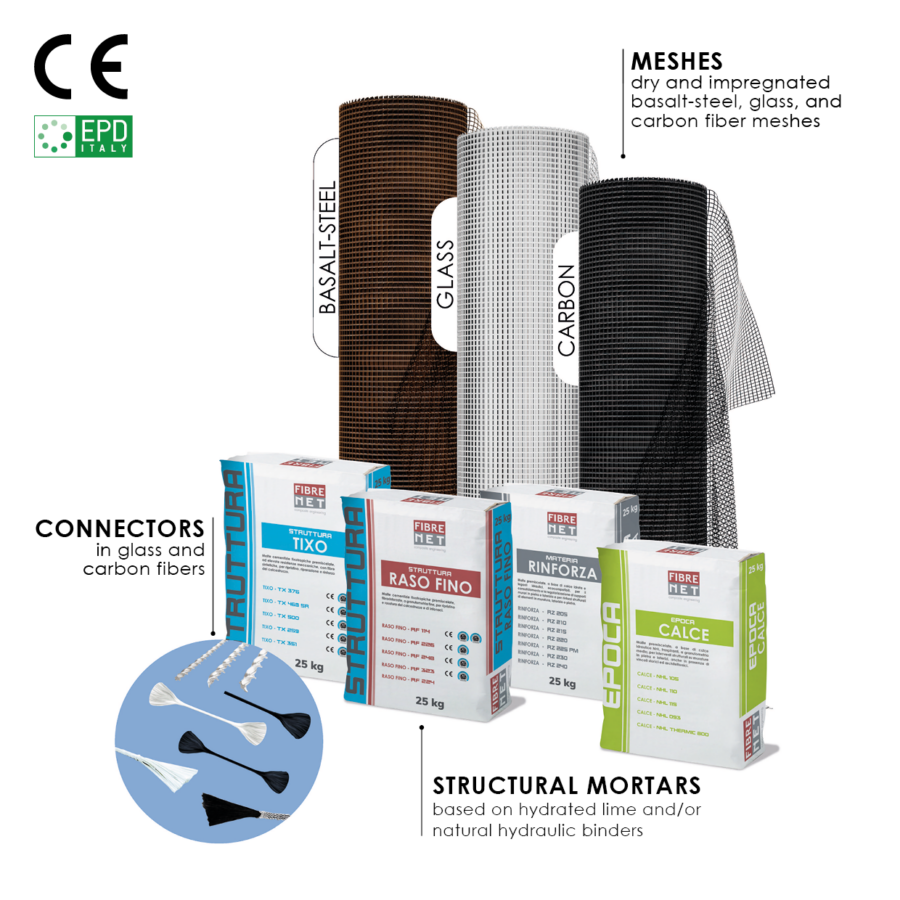
A strengthening technique for masonry and concrete elements that combines basalt–steel, carbon, and AR glass fiber meshes with inorganic matrices based on cementitious or lime mortars. Suitable even in high-humidity environments, it ensures strong adhesion to the substrate without increasing mass or stiffness.
In Building Construction
C-MATRIX is used on masonry and reinforced concrete elements to increase load-bearing capacity, particularly with reference to shear and flexural mechanisms, and to improve overall performance under cyclic and seismic actions.
Thanks to the limited added mass and the inorganic matrix, the intervention helps reduce undesired effects related to stiffness increases, while maintaining high strengthening effectiveness.
The possibility of using lime-based matrices and the suitability for humid environments make the system ideal for the rehabilitation and strengthening of historic and residential buildings, where chemical-physical compatibility with existing materials, breathability, and long-term durability are essential.
The strong bond of the composite to the substrate, combined with the lightweight nature of the reinforcement, also enhances ductility and energy dissipation capacity, contributing to improved structural reliability during service.
In Infrastructure
C-MATRIX FRCM systems are used for the strengthening and rehabilitation of bridges, viaducts, tunnels, and structures exposed to high stress levels and aggressive environmental conditions.
In these contexts, the system represents an effective solution for both localized and extensive interventions, ensuring stable long-term performance and application methods compatible with the operational requirements of in-service infrastructure.
Masonry
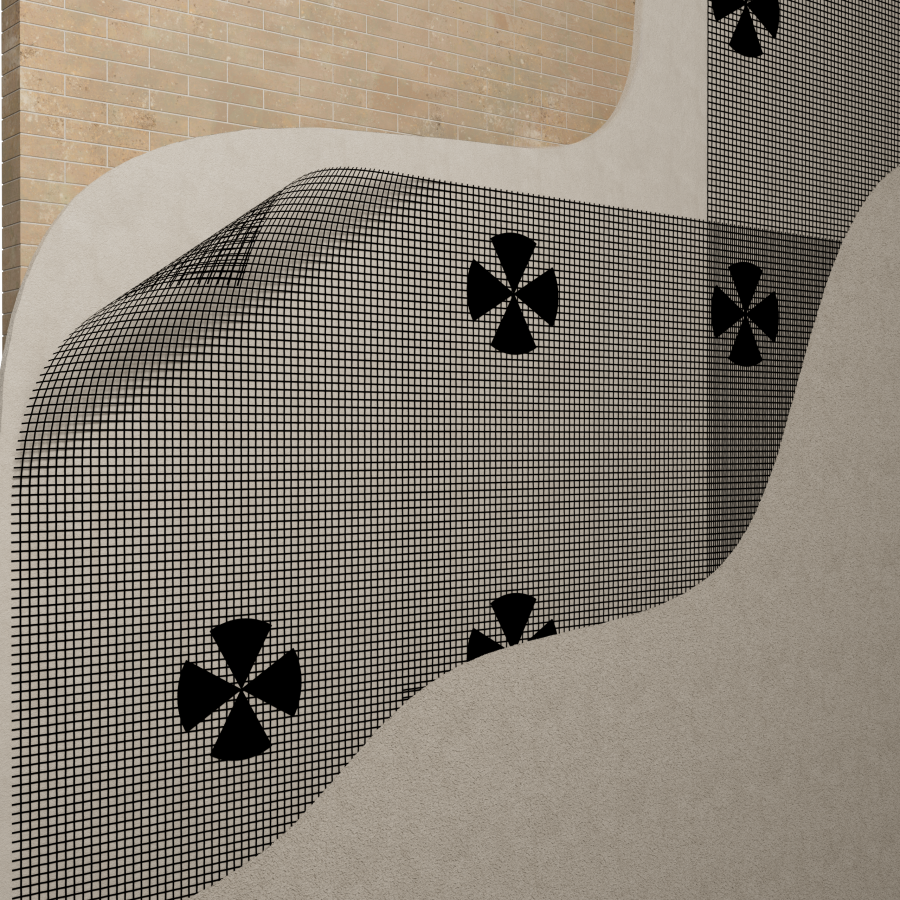
The use of FRCM systems for strengthening vertical masonry elements (piers and spandrel beams) makes it possible to increase their load-bearing capacity both in shear and in bending–compression, without altering their original stiffness.
The effectiveness of the intervention can be further enhanced by installing transverse connectors in critical sections.
The reduced thickness of the reinforcement and the flexibility of the meshes make this technique particularly suitable for load-bearing masonry featuring decorative architectural elements, as well as for interventions on non-load-bearing walls.
Arches and Vaults
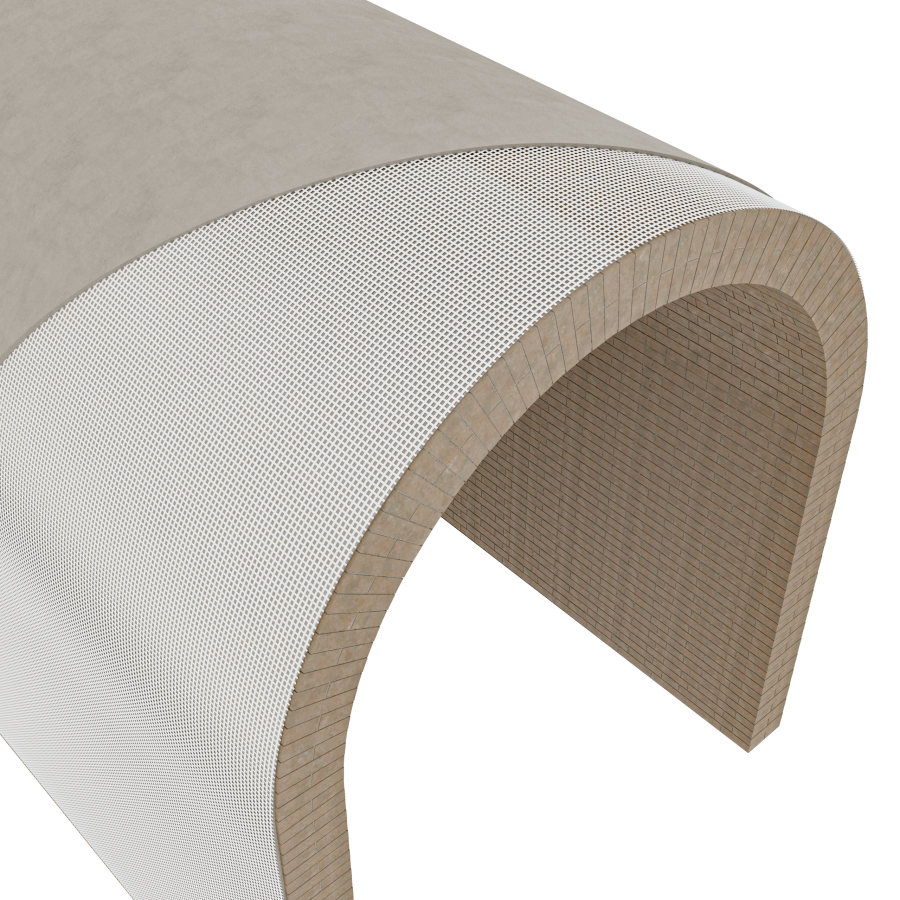
The strengthening intervention using FRCM systems on masonry arches and vaults is aimed at compensating for the lack of tensile strength in the masonry, counteracting the formation of hinges and thus preventing the activation of kinematic collapse mechanisms.
FRCM systems are characterized by limited thickness and the possibility of being applied either continuously or in strips, allowing them to adapt to different geometric configurations and intervention levels.
The reinforcement can be applied to both the intrados and the extrados and connected to the surrounding masonry and the substrate not only through adhesion but also by means of dedicated connectors.
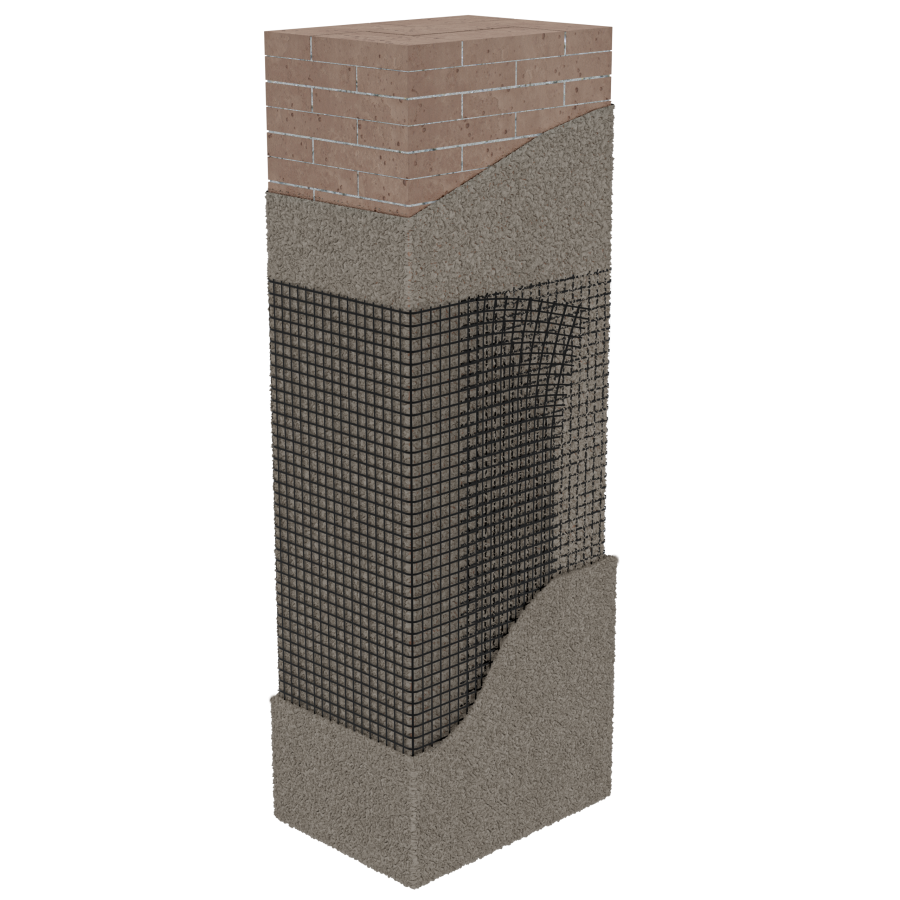
Columns and Piers
The confinement of masonry columns and piers using FRCM systems involves the application of a composite layer with an inorganic matrix. The fibers, oriented perpendicular to the axis of the element, counteract transverse dilation, resulting in an increase in both load-bearing capacity and ductility.
To ensure full effectiveness of the intervention, it is recommended to provide connection elements at both the top and the base of the column.
The strengthening can be carried out continuously or in strips, while ensuring adequate overlaps (not less than one quarter of the section perimeter or, in any case, not less than 300 mm, or reduced lengths if supported by appropriate experimental validation included in the System’s Declaration of Performance).
In the case of square or rectangular sections, confinement provides limited increases in compressive strength; for particularly elongated geometries (ratio b/h > 2), the effectiveness of the strengthening cannot be considered without appropriate experimental validation.
Before application, it is necessary to round off the edges of the section to avoid local stress concentrations that could trigger premature failure of the composite.

The load-bearing capacity of strengthened elements is increased without significantly affecting the stiffness and mass of the structure.
The reduced thickness of the intervention (starting from 8 mm) and the flexibility of the meshes make the system ideal for elements with complex geometries, such as intricate vaults or façades with pilasters and cornices.
The system complies with reversibility criteria required for interventions on protected heritage, allowing removal without causing permanent damage to the existing structure.
The mesh–matrix interaction has been optimized to ensure excellent adhesion and chemical-physical compatibility with any substrate, guaranteeing long-term durability of the intervention.
The lightweight and easy-to-handle meshes allow for quick and simple installation, reducing execution time and operational interference on site.
The systems are eco-friendly and have a low environmental impact, meeting CAM requirements and certified with EPD (Environmental Product Declaration).
C-MATRIX G220N15-S C-MATRIX G220N15-S is an FRCM (Fiber Reinforced Cementitious Matrix) reinforcement system that combines the efficiency of a bidirectional dry AR glass fiber mesh with an inorganic matrix based on natural hydraulic lime (NHL). The system offers excellent chemical-physical and elasto-mechanical properties, ensuring optimal compatibility with support materials, including architecturally protected structures. System components: FB-VAR220R12, EPOCA CALCE CNHL115 | Download |
C-MATRIX G220C15-S C-MATRIX G220C15-S is an FRCM reinforcement system that combines the effectiveness of a bidirectional dry AR glass fiber mesh with an inorganic matrix based on lime and hydraulic binders. The system offers excellent chemical-physical and elastomechanical properties while ensuring optimal compatibility with substrate materials, including those in architecturally protected or listed structures. System components: FB-VAR220R12, MATERIA RINFORZA - RZ215 | Download |
C-MATRIX C225N15-S C-MATRIX C225N15-S is an FRCM reinforcement system that combines the performance of a bidirectional dry carbon fiber mesh with high tenacity and an inorganic matrix based on natural hydraulic lime (NHL). The system offers excellent chemical-physical and elastic-mechanical properties, ensuring optimal compatibility with substrate materials, including those in architecturally protected or heritage structures. System components: FB-RC225-TH12-R16, EPOCA CALCE CNHL115 | Download |
C-MATRIX G220N15-M C-MATRIX G220N15-M is an FRCM reinforcement system that combines the effectiveness of a bidirectional dry AR (Alkali Resistant) fiberglass mesh and an inorganic matrix based on natural hydraulic lime (NHL), bonded together by a water-based adhesion promoter. The system offers excellent chemical-physical and elasto-mechanical properties and ensures optimal compatibility with supporting materials, even on architectural heritage subject to protection/restrictions. System components: FB-VAR220R12, EPOCA CALCE CNHL115, FB-IPN01 | Download |
C-MATRIX C225N15-M C-MATRIX C225N15-M is an FRCM (Fiber Reinforced Cementitious Matrix) reinforcement system that combines the effectiveness of a bidirectional dry high-tenacity carbon fiber mesh and an inorganic matrix based on natural hydraulic lime (NHL), bonded together by a water-based adhesion promoter. The system offers excellent chemical-physical and elasto-mechanical properties and ensures optimal compatibility with the supporting materials, even on architectural assets subject to preservation/protection. System components: FB-RC225-TH12-R16, EPOCA CALCE CNHL115, FB-IPN01 | Download |
C-MATRIX C225C40-H C-MATRIX C225C40-H is an FRCM (Fiber Reinforced Cementitious Matrix) reinforcement system that combines the effectiveness of a high-strength bidirectional carbon fiber mesh impregnated with an organic matrix and an inorganic cement-based matrix. The system offers excellent chemical-physical and elasto-mechanical properties. System components: FB-RC225-TH12S, STRUTTURA RASO FINO – RF248 | Download |
C-MATRIX C225N15-H C-MATRIX C225N15-H is an FRCM reinforcement system that combines the effectiveness of a bidirectional high-strength carbon fiber mesh impregnated with an inorganic matrix based on natural hydraulic lime (NHL). This system offers excellent chemical-physical and elastomechanical properties, ensuring optimal compatibility with supporting materials, even in architectural assets under preservation or protection constraints. System components: FB-RC225-TH12S, EPOCA CALCE CNHL115 | Download |
C-MATRIX G220N15-H Resistant) fiberglass bidirectional mesh impregnated with resin and an inorganic matrix based on natural hydraulic lime (NHL). The system offers excellent chemical-physical and elastomechanical properties and ensures optimal compatibility with support materials, even on architectural assets subject to preservation or protection. System components: FB-VAR220R12S, EPOCA CALCE CNHL115 | Download |
C-MATRIX G320C40-H C-MATRIX G320C40-H is an FRCM (Fiber Reinforced Cementitious Matrix) reinforcement system that combines the performance of an AR glass fiber bidirectional mesh with an inorganic cementitious matrix. The system provides excellent chemical-physical and elastomechanical properties, ensuring optimal compatibility with substrate materials. System components: FB-VAR320R16S, STRUTTURA RASO FINO – RF248: | Download |
 2
2
of 15







 Back to home