
BETONTEX is Fibre Net’s range of FRP (Fiber Reinforced Polymer) structural strengthening systems based on carbon fibers and epoxy matrices. The range includes unidirectional and multiaxial fabrics, meshes, laminates (pultruded plates), fiber bundles, as well as preformed bars and anchoring devices, applied by bonding and/or in-situ impregnation with thermosetting epoxy resins, depending on the intervention technique and design details.
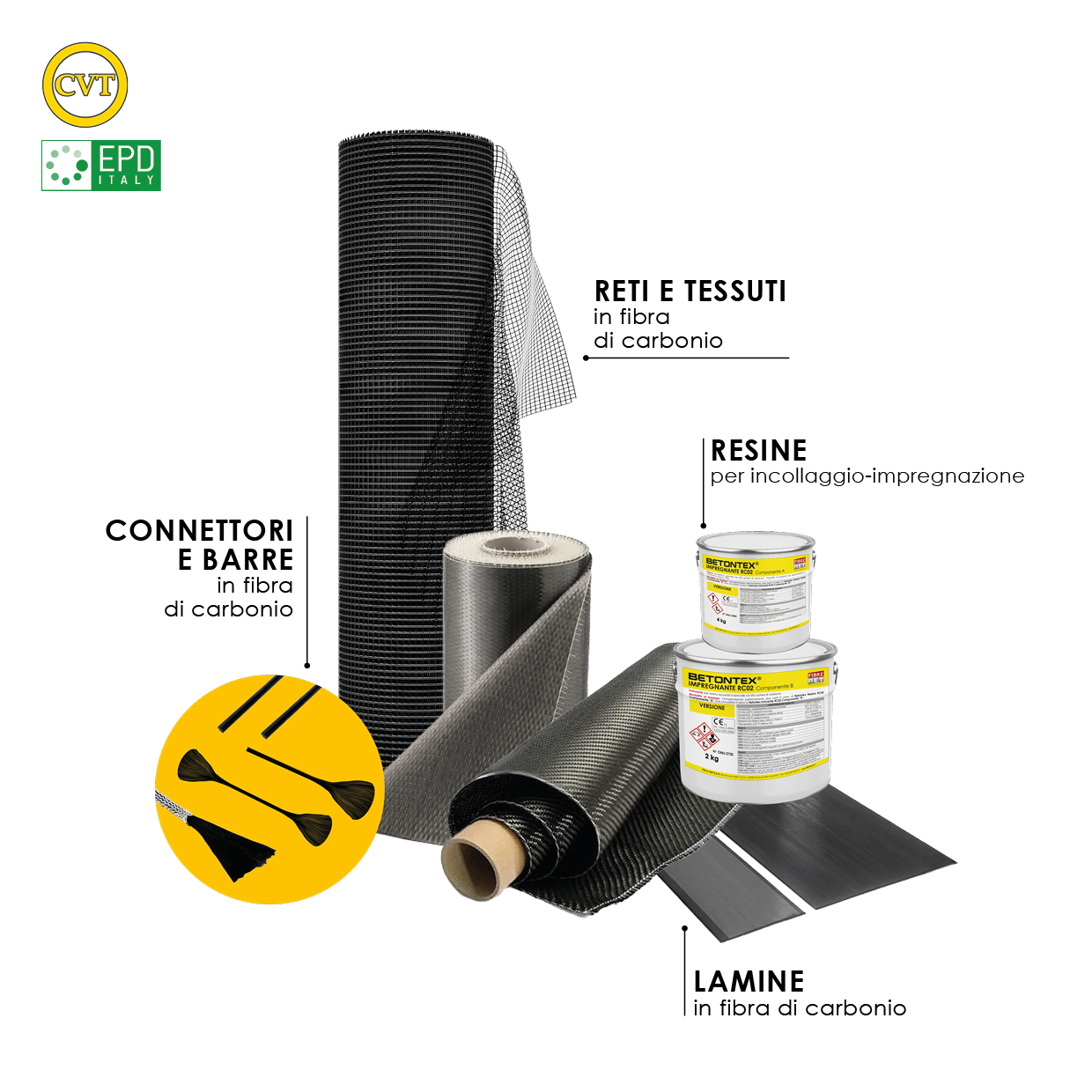
BETONTEX systems are designed for interventions on concrete and masonry where a significant performance increase is required, with limited application thickness and negligible added mass.
The high tensile strength of carbon fiber, combined with the durability of the composite material, enables effective strengthening solutions for restoring load-bearing capacity and upgrading structures to meet service loads and exceptional actions, including seismic events.
From a certification standpoint, fabrics, meshes, and laminates of the BETONTEX line are provided with CVT (Technical Evaluation Certificate), while preformed bars and anchoring devices are CE-marked, ensuring proper specification and traceability of the components used.
In Building Construction
BETONTEX is used for repair and strengthening interventions, as well as for the static and seismic upgrading of structural elements, with particular effectiveness in applications requiring high tensile performance.
Go to productsIn Infrastructure
Carbon fiber FRP systems are widely used in bridges, infrastructure works, and structures made of reinforced concrete or masonry. Their combination of high mechanical performance, light weight, and corrosion resistance enables durable interventions, with minimal impact on the structure’s mass and geometry, and improved reliability during service.
Go to products
Masonry
The intervention on masonry consists of applying carbon fiber strips impregnated with epoxy resin, arranged to form truss patterns or positioned along the diagonals of the masonry panel.
This technique, mainly suitable for interventions on good-quality masonry, allows an increase in the element’s resistance to bending–compression and/or shear.
In the presence of deteriorated or heterogeneous masonry, it is preferable to adopt alternative techniques based on distributed strengthening layers.
To ensure the effectiveness of the intervention, careful substrate preparation is essential, aimed at guaranteeing optimal adhesion and preventing possible debonding. In the case of irregular surfaces, a leveling mortar layer is applied to provide a suitable substrate for bonding the strips.
The intervention can be completed by using spike anchors (frayed fiber connectors).
Arches and Vaults
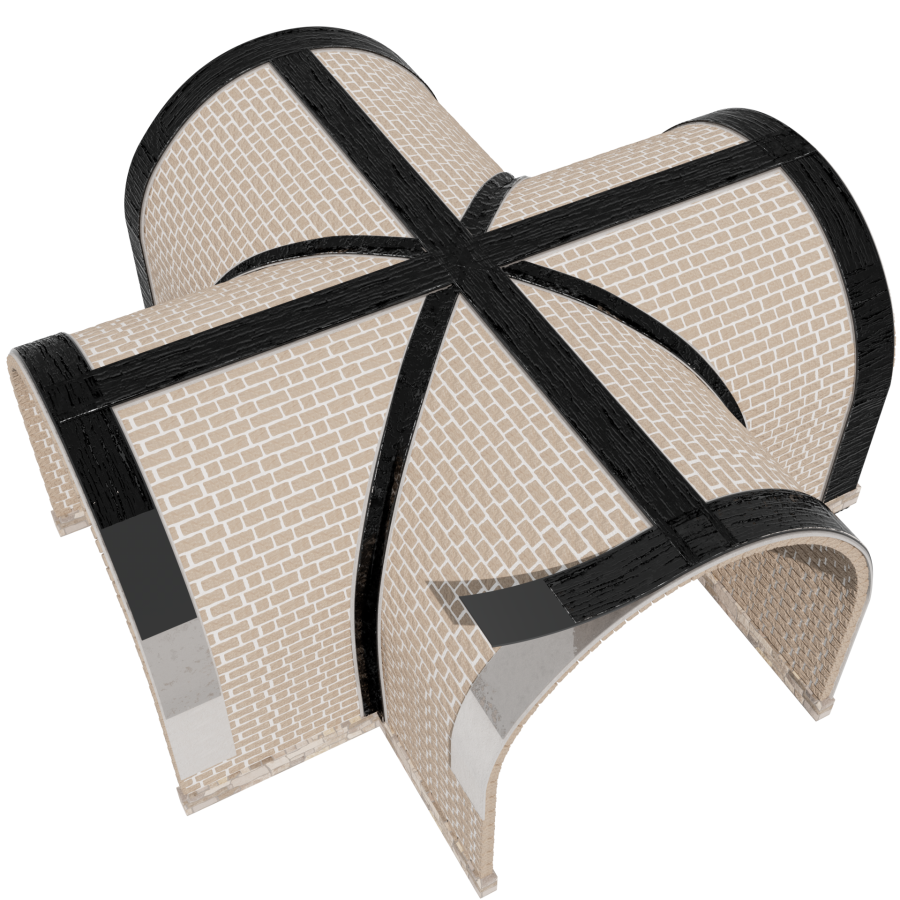
The strengthening intervention of masonry arches or vaults using FRP systems consists of applying unidirectional fabrics and bidirectional carbon fiber meshes, arranged at the intrados or extrados of the structure.
The application must be carried out on a properly prepared substrate to ensure optimal adhesion of the reinforcement and to prevent possible debonding.
The intervention on these structural elements allows an increase in both the static and seismic capacity of the vault and prevents the formation of hinges and, therefore, collapse due to kinematic mechanisms.
In the case of application at the extrados, it is essential to ensure adequate anchorage of the ends, which can be achieved using preformed spike anchors.
For reinforcements applied at the intrados, attention must be paid to possible premature debonding phenomena due to the curvature of the vault.
Beam–Column Joint
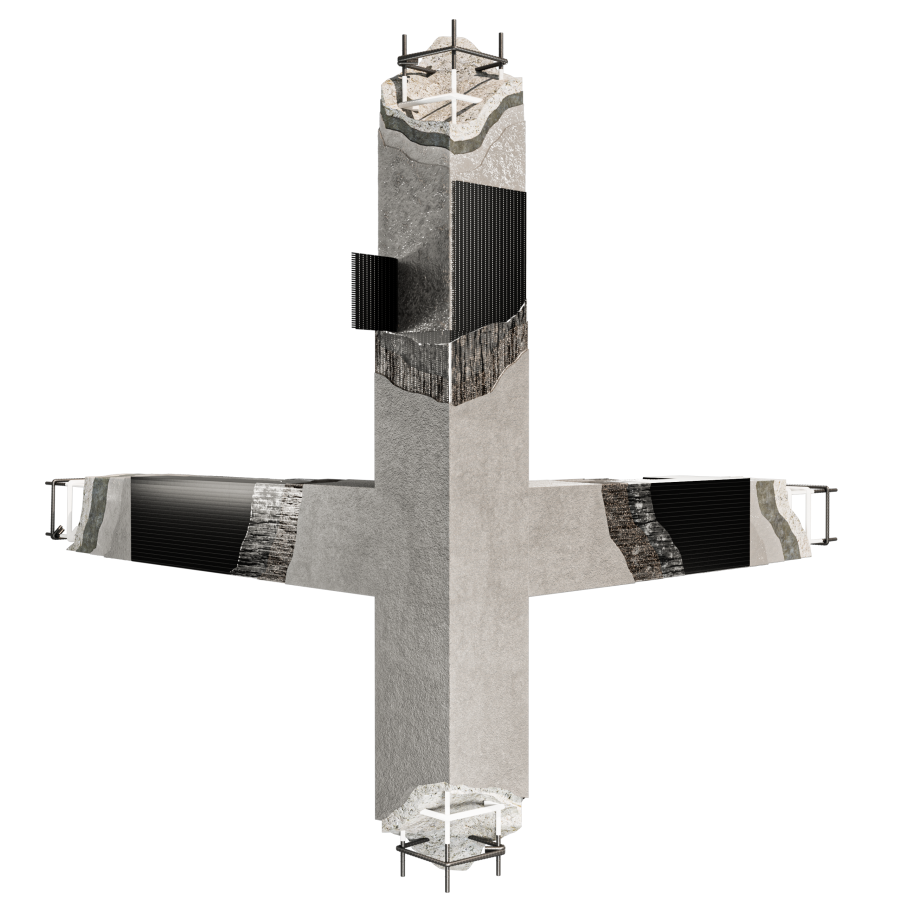
The intervention consists of applying FRP structural strengthening systems made of multiaxial and/or unidirectional carbon fiber fabrics at the beam–column joint.
The resulting strengthening system ensures an increase in shear capacity and provides effective confinement of the joint.
Strengthening of Floors and Slabs
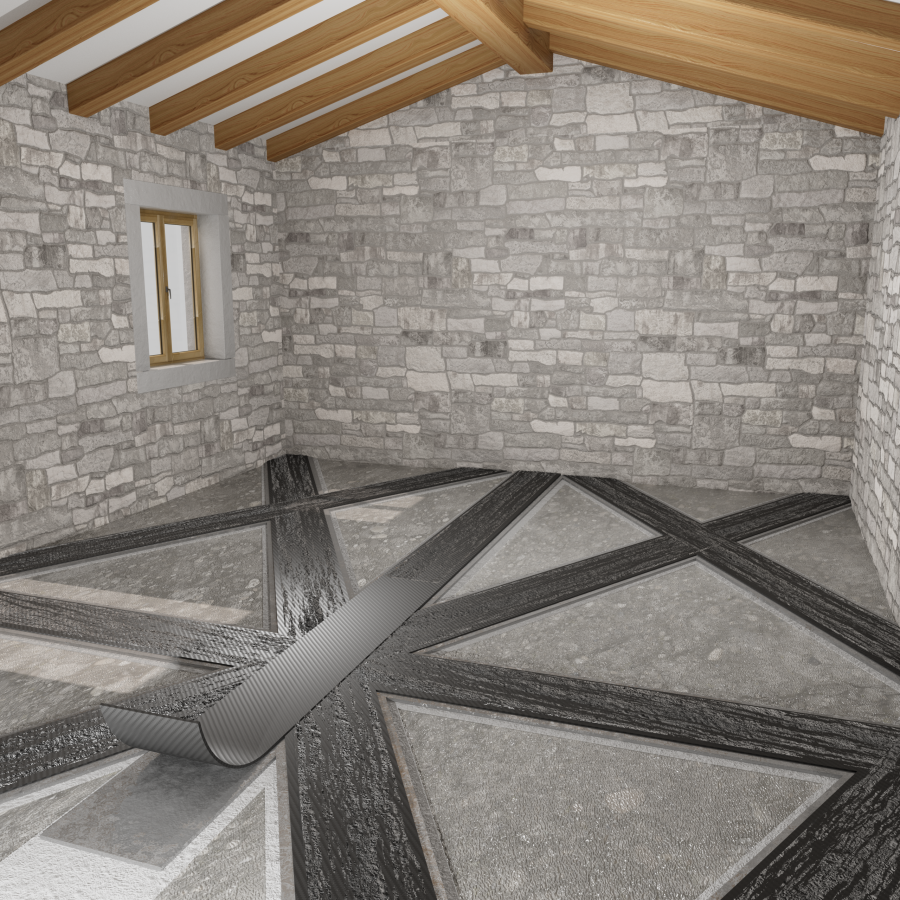
The intervention consists of applying FRP structural strengthening systems using unidirectional fabrics or bidirectional carbon fiber meshes on the extrados of the floors.
The resulting strengthening system provides high durability, full reversibility, and complete compatibility with traditional materials, with a negligible increase in permanent loads thanks to the extremely limited thickness, and minimal invasiveness on the existing structure.
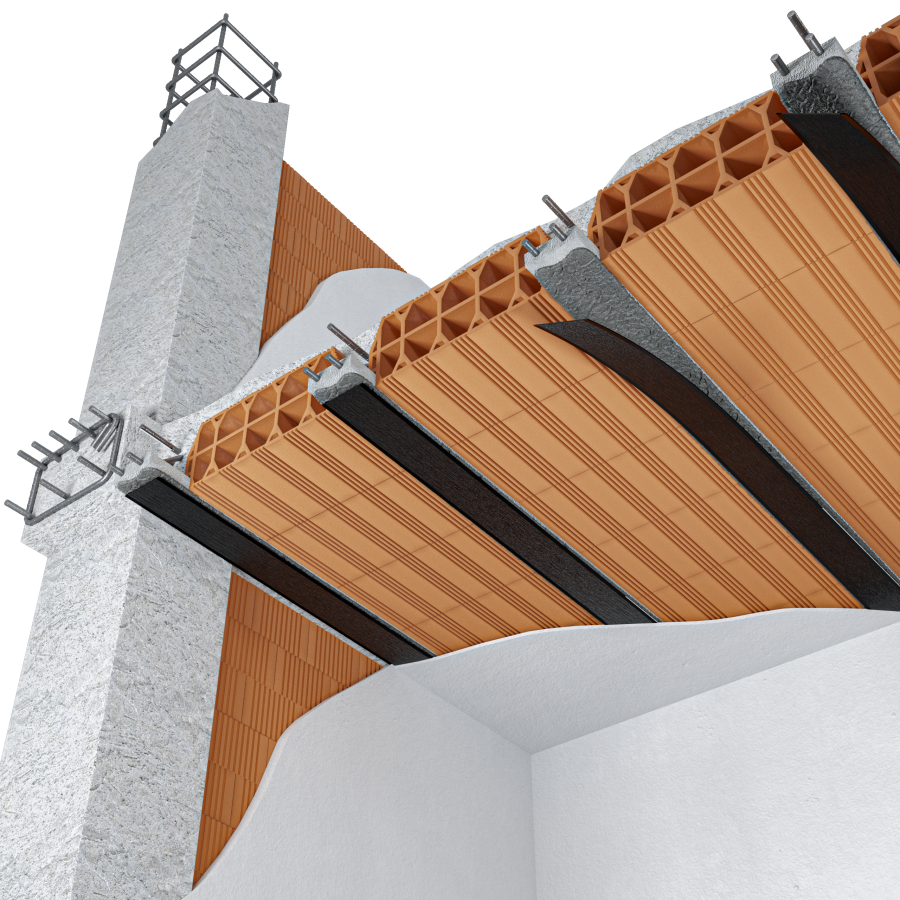
Joist Strengthening
The intervention consists of the structural strengthening of joists through the application, at the intrados, of FRP systems made of pultruded laminates and/or unidirectional carbon fiber fabrics.
The technique is aimed at strengthening elements primarily subjected to flexural and combined bending–compression stresses, with the objective of increasing their load-bearing capacity and improving their performance under dynamic actions, particularly of a seismic nature.
The resulting strengthening ensures a significant increase in mechanical strength, stiffness, and ductility, as well as improving the element’s response to cyclic loading.
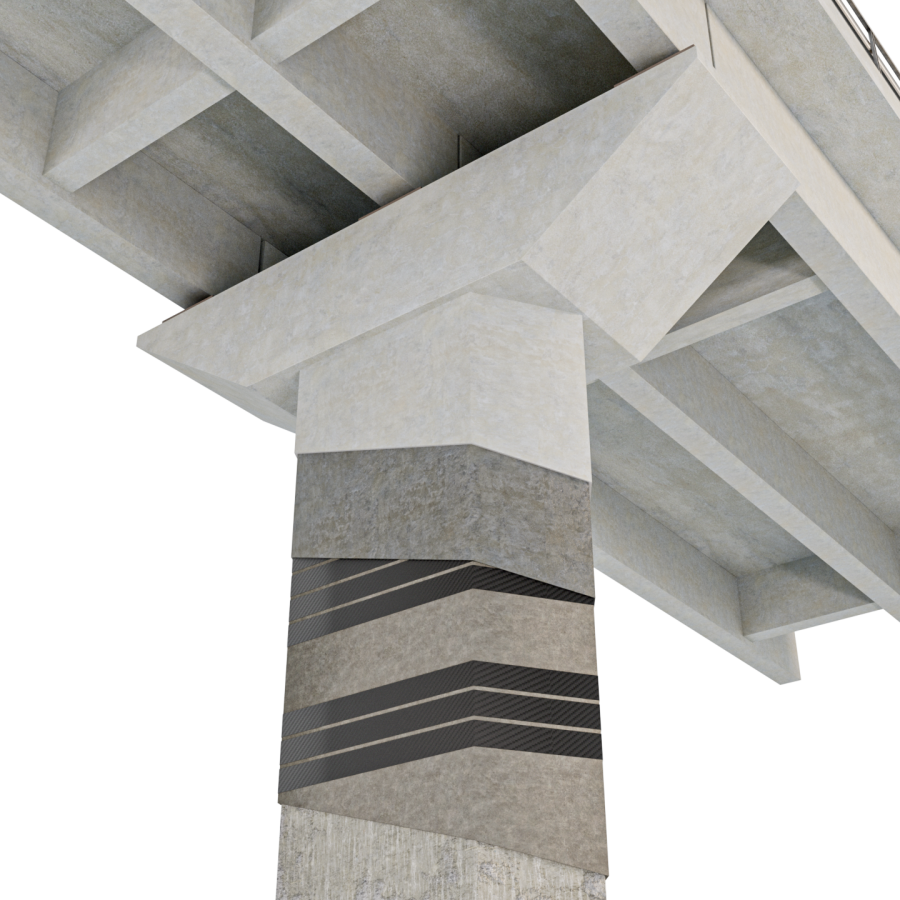
Pier Strengthening
FRP strengthening systems can be used to increase the load-bearing capacity and ductility of reinforced concrete bridge piers.
One of the main advantages of using composite materials is the improvement of the seismic performance of these elements. In seismic applications, FRP materials are particularly effective when used to confine the concrete in the regions where plastic hinges may form.
As is well known, confinement leads to an increase in the ultimate strain of the concrete, the curvature at section level, and the chord rotation of the structural element, resulting in an overall increase in ductility.
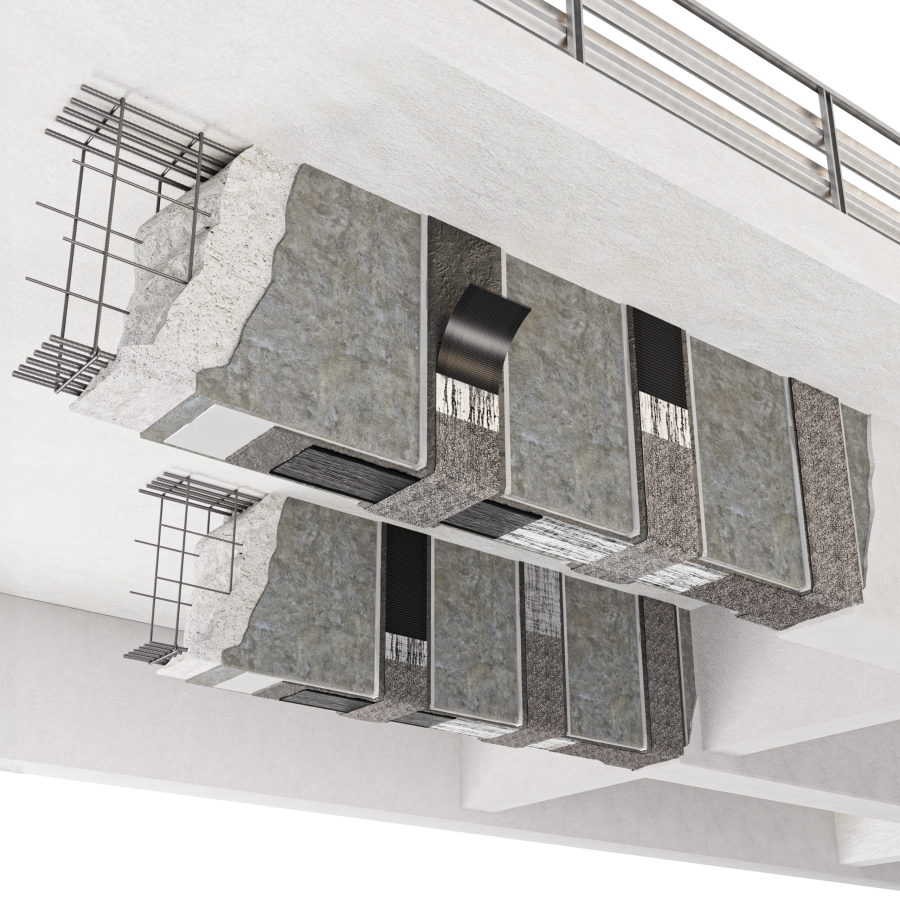
Deck Strengthening
Ageing, regulatory upgrades, and material deterioration often make strengthening interventions on decks necessary. Once the underlying causes have been addressed, composite materials can be used to achieve the required levels of safety, serviceability, and/or operational performance of the structure.
In addition, the use of FRP systems allows effective interventions to be carried out within short timeframes, using equipment and construction processes that are safer for operators compared to traditional methods.
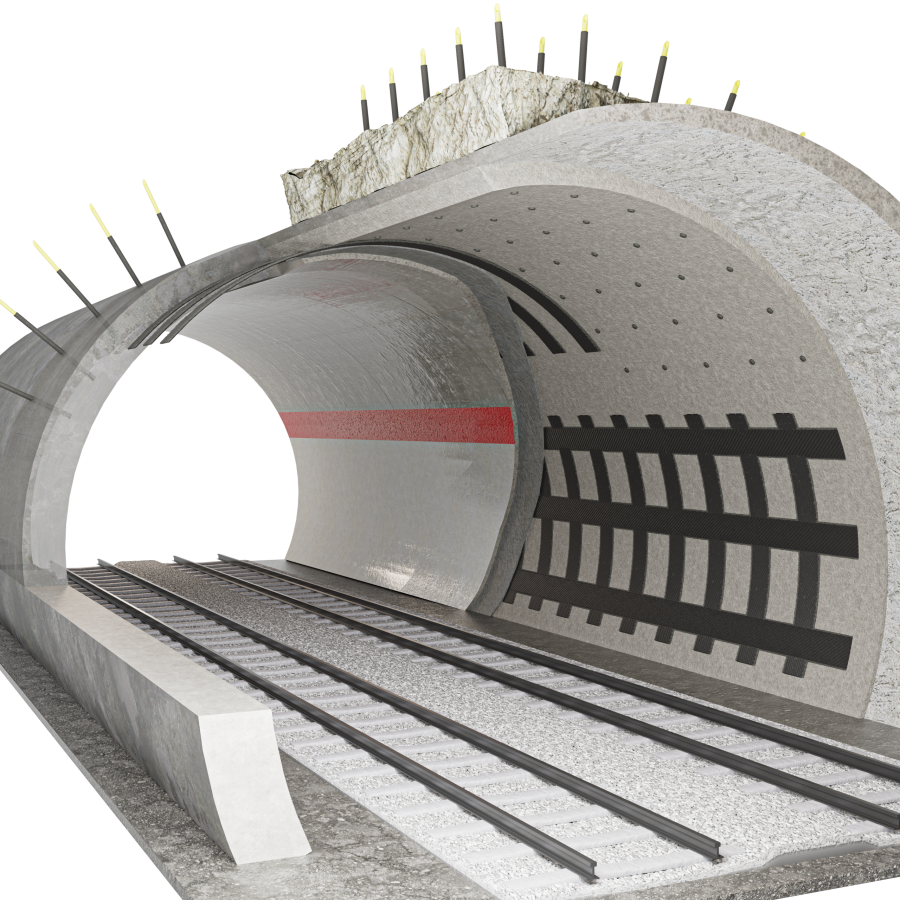
Tunnel Strengthening
In the case of functional upgrading of tunnels, composite materials represent an excellent solution thanks to their high strength, low specific weight, and outstanding durability.
These materials improve the tensile capacity of concrete or reinforced concrete sections, significantly increasing the load-bearing capacity of the structural element.

Carbon fiber FRP reinforcements provide high tensile strength, a high elastic modulus, and an उत्कृष्ट strength-to-weight ratio.
The extremely limited thickness and lightweight nature of the materials make these systems ideal for interventions where increases in mass and stiffness must be avoided.
The possibility of varying fabric weight, number of layers, and fiber orientation allows the reinforcement to be tailored to specific design requirements, enabling targeted and low-impact interventions.
The extensive use of FRP systems in the strengthening of reinforced concrete and masonry structures has demonstrated their effectiveness, including in seismic upgrading and retrofit applications.
The light weight and ease of handling of the materials facilitate transport and installation, even in confined spaces or complex geometries. Installation is quick and does not require extensive demolition, reducing both execution time and costs.
The systems are eco-friendly and have a low environmental impact, complying with CAM requirements and certified with EPD (Environmental Product Declaration).
 2
2
of 15









 Back to home