
RI-STRUTTURA, RI-STRUTTURA FORCE, and H-PLANET are CRM (Composite Reinforced Mortar) structural strengthening systems that use meshes, corner elements, and connectors made of FRP (Fiber Reinforced Polymer), combined with structural mortars based on NHL lime or cement.
Used for seismic improvement and retrofitting, as well as for the strengthening of deteriorated structures, these three systems differ in the type of fibers used in the FRP components and in their respective mechanical performance.
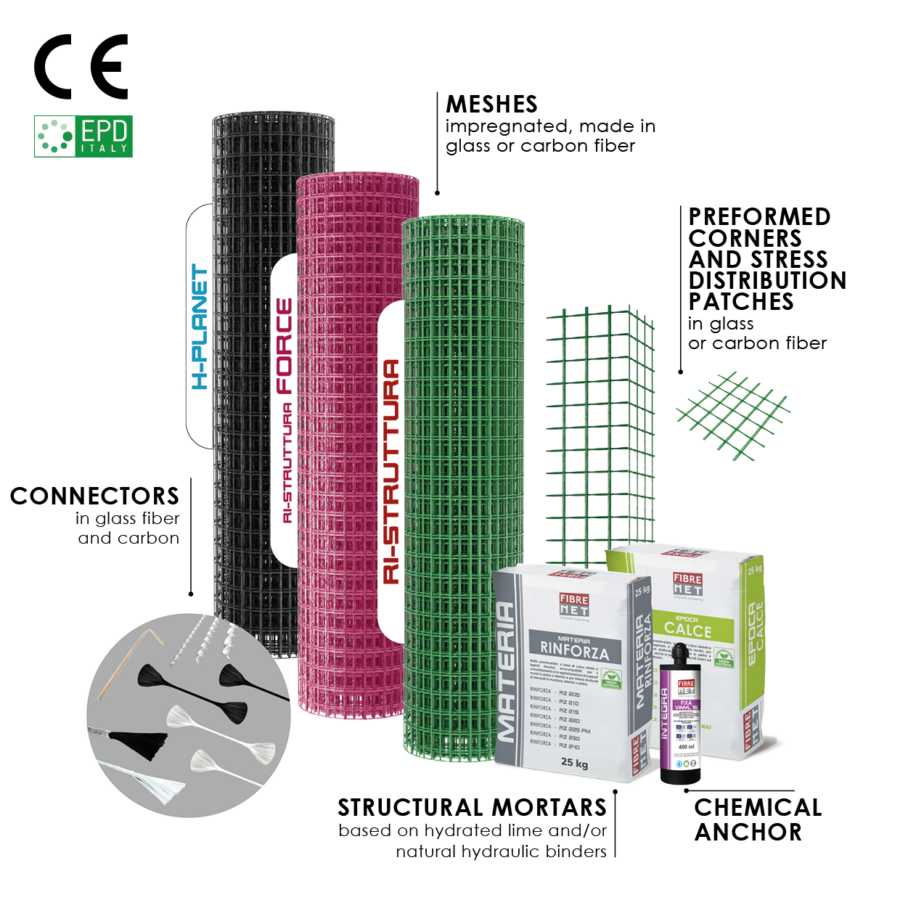
RI-STRUTTURA is a range of meshes, corner elements, and connectors made of GFRP (Glass Fiber Reinforced Polymer), produced from long alkali-resistant glass fibers impregnated with thermosetting epoxy-vinylester resin.
RI-STRUTTURA FORCE includes new preformed GFRP meshes developed to deliver high mechanical performance.
In Building Construction
CRM technology increases the shear, bending, and compressive strength of masonry, improving its seismic performance.
Go to productsIn Infrastructure
GFRP meshes, being radio-transparent and non-magnetic, are particularly suitable for bridge abutments, arches, viaducts, and tunnels. They ensure durability, chemical resistance, and help prevent micro-cracking in surface repair works.
Their high durability and chemical resistance also help limit micro-cracking phenomena in surface restoration and reinforced coatings.
H-PLANET is a high-performance system consisting of meshes, corner elements, and connectors in CFRP (Carbon Fiber Reinforced Polymer), with bars made from long carbon fibers impregnated with thermosetting epoxy-vinylester resin.
The system combines preformed CFRP components with high-strength mortars, making it ideal for applications requiring high performance with minimal thickness.
In Building Construction
H-PLANET enhances the ductility of existing masonry, improves energy dissipation capacity, and increases resistance to out-of-plane (orthogonal) actions, providing a significant contribution to seismic risk mitigation.
Go to productsIn Infrastructure
Thanks to the high mechanical strength and lightweight properties of carbon fiber, the system is particularly suitable for strengthening deteriorated concrete and for interventions on bridges and infrastructure, with minimal impact on structural mass and stiffness.
Go to productsCRM systems can be applied to a wide range of structural elements—masonry walls, arches and vaults, floors, columns, and piers—ensuring effective strengthening interventions and seismic upgrading in existing buildings.
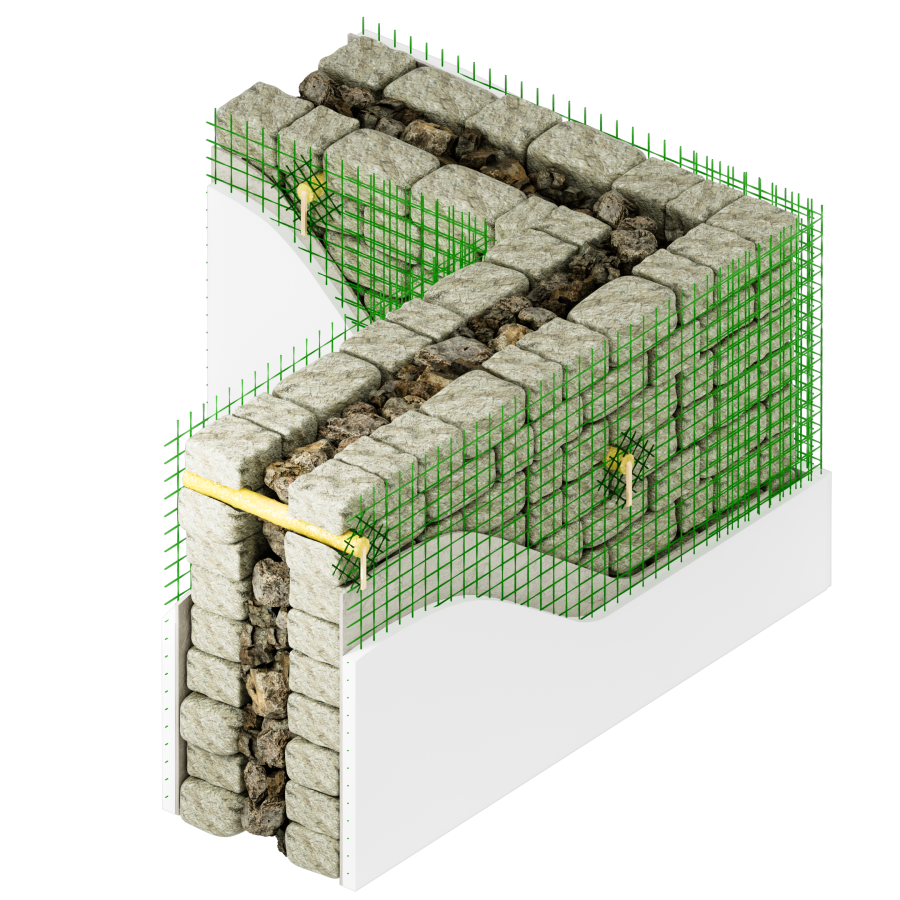
Masonry
CRM intervention improves the load-bearing capacity and ductility of vertical masonry elements (piers and spandrel beams), enhancing their performance under shear forces as well as in-plane and out-of-plane bending–compression, with only a limited increase in stiffness.
The strengthening intervention can also be applied on a single face of the masonry. The corrosion-free nature of the reinforcement elements ensures high durability and long-term effectiveness of the system, while allowing the use of thin layers of structural mortar, thereby limiting any increase in structural mass.
The system is reversible and is therefore also suitable for interventions on historic masonry.
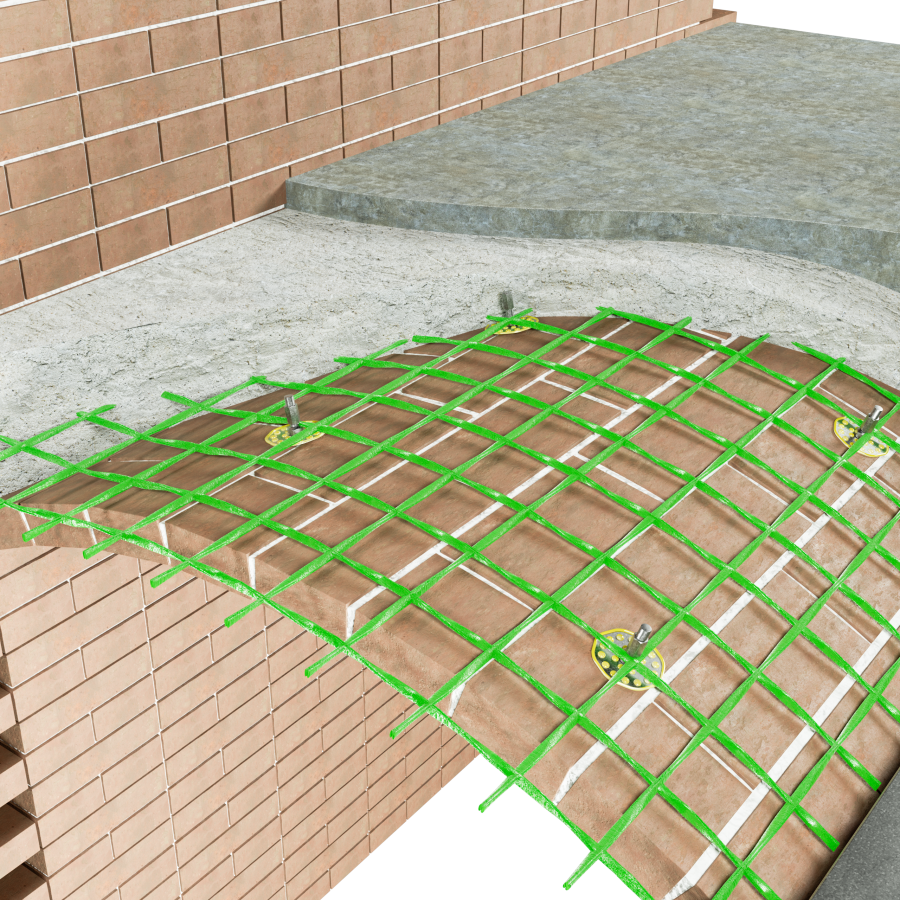
Arches and Vaults
The strengthening intervention using a CRM system on masonry arches and vaults consists of applying a thin overlay of low-modulus mortar—preferably lime-based—reinforced with a preformed FRP mesh.
The goal is to compensate for the lack of tensile strength in the masonry by counteracting the formation of hinges. Additionally, the added thickness of the strengthening mortar increases the cross-section, allowing for greater variation in the thrust line and improving the overall stability of the arch or vault.
The CRM system enables a uniform and distributed increase in the vault’s capacity to withstand gravitational loads and enhances its response under seismic actions.
This technique can be applied on the intrados (inner surface), the extrados (outer surface), or on both sides. In all cases, the system must be effectively connected to the surrounding masonry.
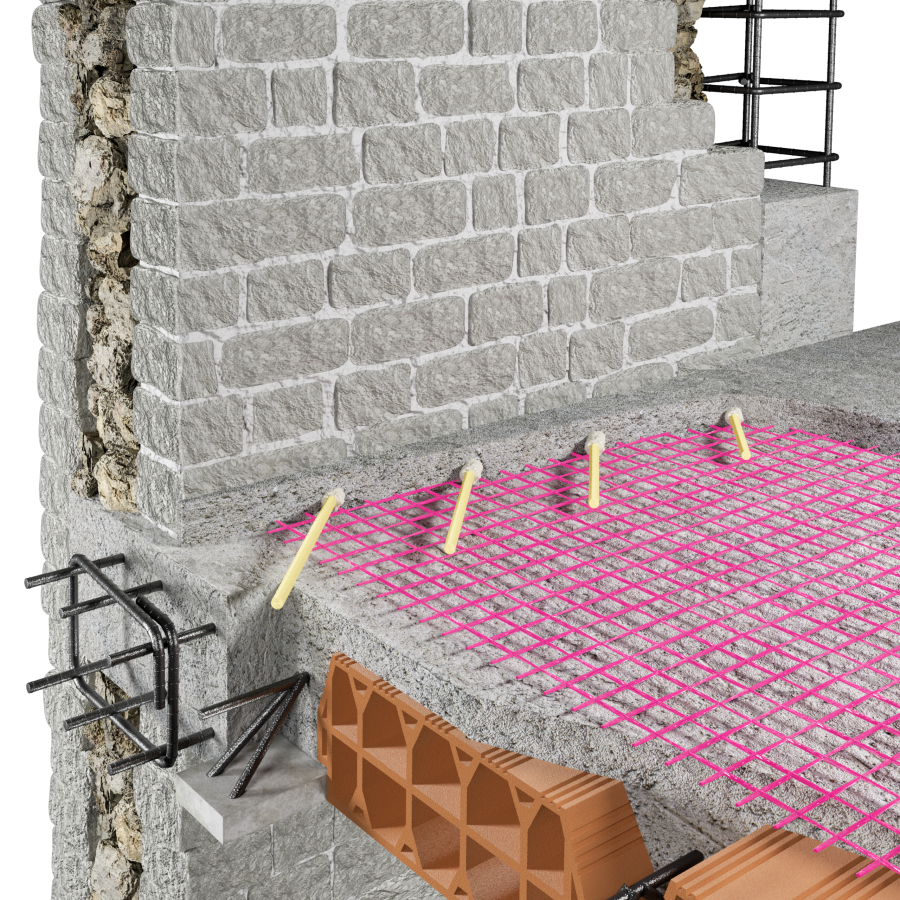
Floors
The strengthening intervention on existing floors consists of creating a thin composite slab made of structural mortar, reinforced with preformed composite meshes, and connected to both the floor system and the vertical structural elements.
The objective is to increase the floor’s capacity to distribute horizontal and vertical loads, reduce deformations, and improve the overall building performance under seismic actions.
The use of glass or carbon fiber meshes, combined with controlled-performance mortars, enables a uniform distribution of stresses within the plane of the slab and effective stiffening of the floor system, with only a limited increase in thickness and self-weight.
The strengthening can be applied either at the intrados (underside) or extrados (topside), with the mesh connected to the slab using connectors and anchored to the perimeter masonry through composite or steel bars.
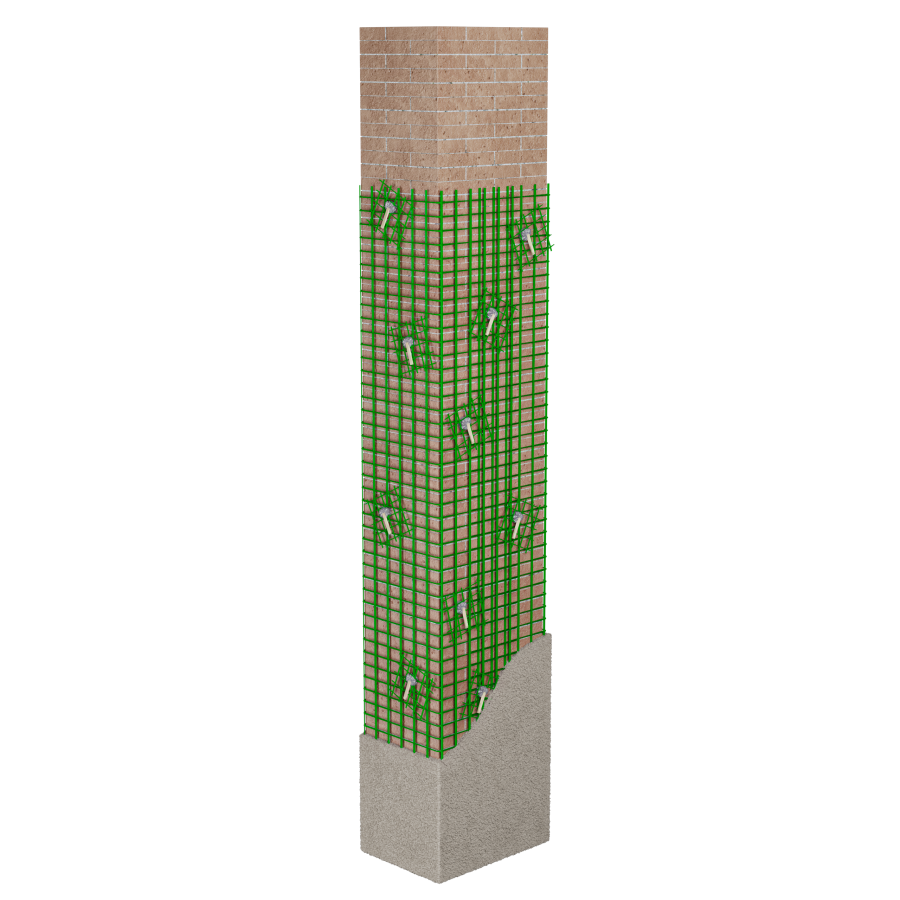
Columns and Piers
The confinement intervention for existing vertical elements consists of applying a continuous reinforcement around the column or pier cross-section using CRM systems for masonry columns and structural piers, achieving a uniform and widespread structural upgrade of the element.
The objective is to increase load-bearing capacity and seismic performance by enhancing resistance to compression as well as bending and shear actions (compression–bending interaction and shear), while also improving ductility and energy dissipation capacity.
Confinement promotes a more uniform distribution of stresses and a more stable structural behavior, reducing vulnerability to brittle failure mechanisms.
The intervention can also be applied to concrete and reinforced concrete columns, depending on the type of structure and the required performance level.
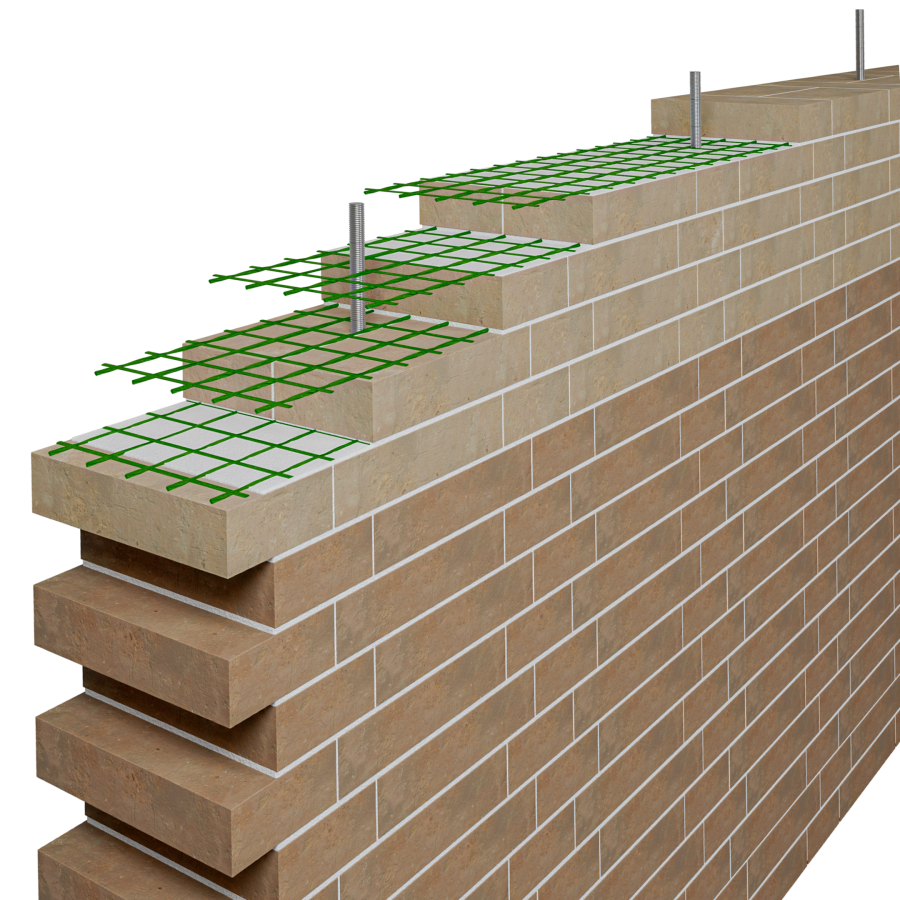
Reinforced Masonry Ring Beams
Reinforced masonry ring beams can be constructed by embedding GFRP or CFRP meshes, with predefined widths and grid spacing, within the horizontal mortar joints. The intervention is completed by installing vertical FRP bars that act as dowels between the ring beam and the underlying existing masonry.
Under seismic actions, the ring beam acts as a top restraint for the supporting walls, counteracting out-of-plane collapse mechanisms. Additionally, when the meshes are properly overlapped and anchored at wall intersections, it promotes a box-like structural behavior of the building.
It is essential to ensure that the existing masonry is of adequate quality; otherwise, appropriate preliminary strengthening interventions must be carried out.
This solution is applicable to both brick and stone masonry and, when executed through controlled dismantling of the upper section, allows the reuse of original materials, preserving the building’s historical and architectural character.
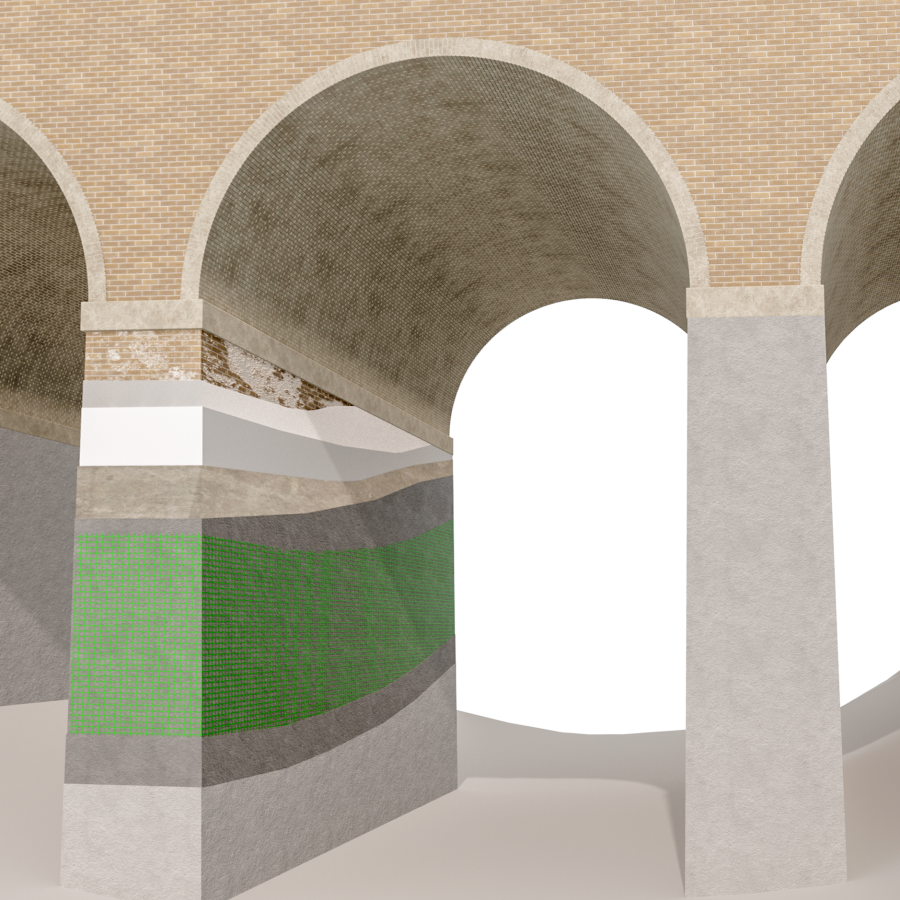
Pier Repair (Bridge Piers)
The repair of bridge piers using restraining mesh involves restoring and stabilizing deteriorated portions of the structural element through the application of a preformed composite mesh, properly anchored to the substrate and embedded in repair mortars or high-performance micro-concrete.
The objective is to prevent the detachment of the concrete cover and damaged areas, improve the confinement of the reconstructed material, and restore the geometric and functional continuity of the section.
The presence of the mesh ensures a more uniform distribution of stresses within the repair layer, limiting cracking phenomena and enhancing the durability of the intervention, particularly in aggressive environments.
The corrosion-free nature of the composite reinforcement makes this system especially suitable for infrastructure exposed to water, de-icing salts, freeze–thaw cycles, and atmospheric agents, offering significant advantages in terms of maintenance and service life.
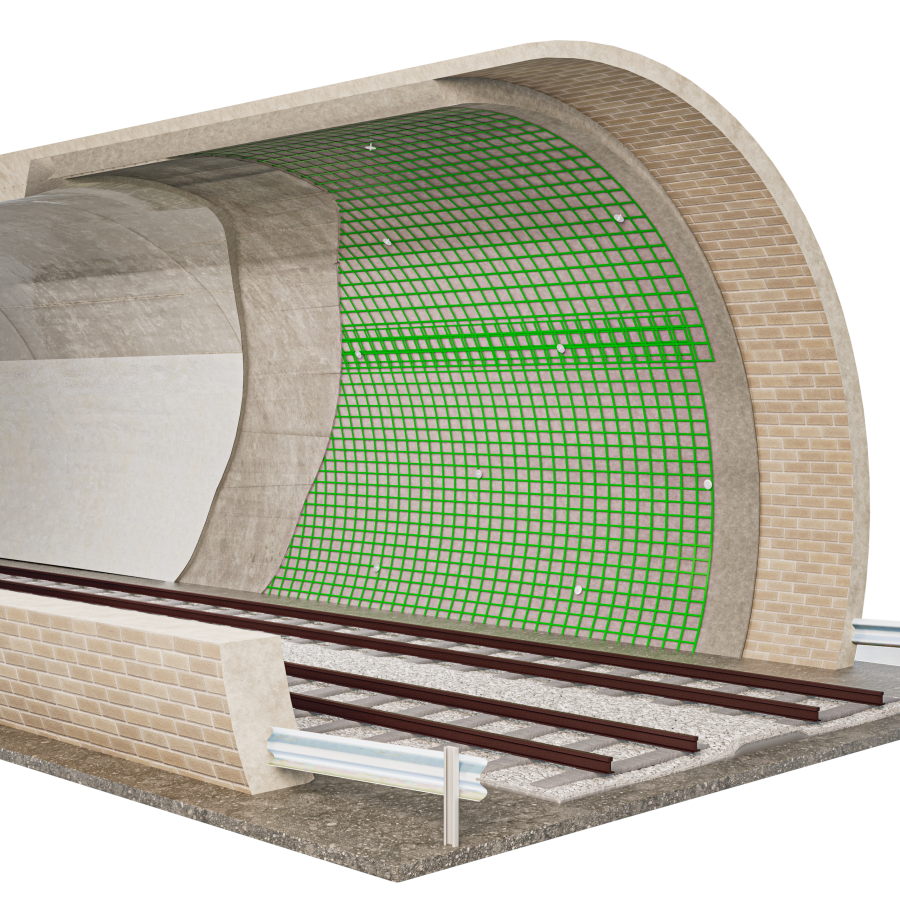
Tunnel Repair and Strengthening
Repair and strengthening interventions in tunnels using composite mesh consist of creating a collaborative reinforced lining applied to the intrados of the existing lining. This is carried out using preformed meshes anchored to the substrate and embedded in structural mortars or shotcrete.
The objective is to secure deteriorated areas, prevent spalling and surface detachment, and enhance the lining’s ability to distribute applied stresses.
The system improves the overall performance of the tunnel crown and walls, reducing vulnerability to cracking, localized loads, dynamic actions, and particularly demanding service conditions.
The use of composite meshes—thanks to their light weight, durability, and corrosion resistance—makes it possible to implement effective interventions even in humid or aggressive environments, while limiting thickness, added weight, and maintenance requirements.

The systems provide a uniform and widespread improvement in the mechanical performance of the structural element to which they are applied, with limited intervention thickness (approximately 3 cm).
The high corrosion resistance of the materials used ensures long-term effectiveness of the strengthening. The possibility of using different types of mortars, including those based on natural hydraulic lime, guarantees breathability as well as chemical and physical compatibility with historic substrates.
The systems are eco-friendly and have a low environmental impact, complying with CAM (Minimum Environmental Criteria) and certified with EPD (Environmental Product Declaration).
Lightweight and easy-to-handle components allow for simple and rapid installation, reducing both construction time and on-site costs.
The ability to remove the systems without permanently altering the original masonry makes them suitable for application on historic buildings or structures subject to conservation constraints.
 2
2
of 15








 Back to home